



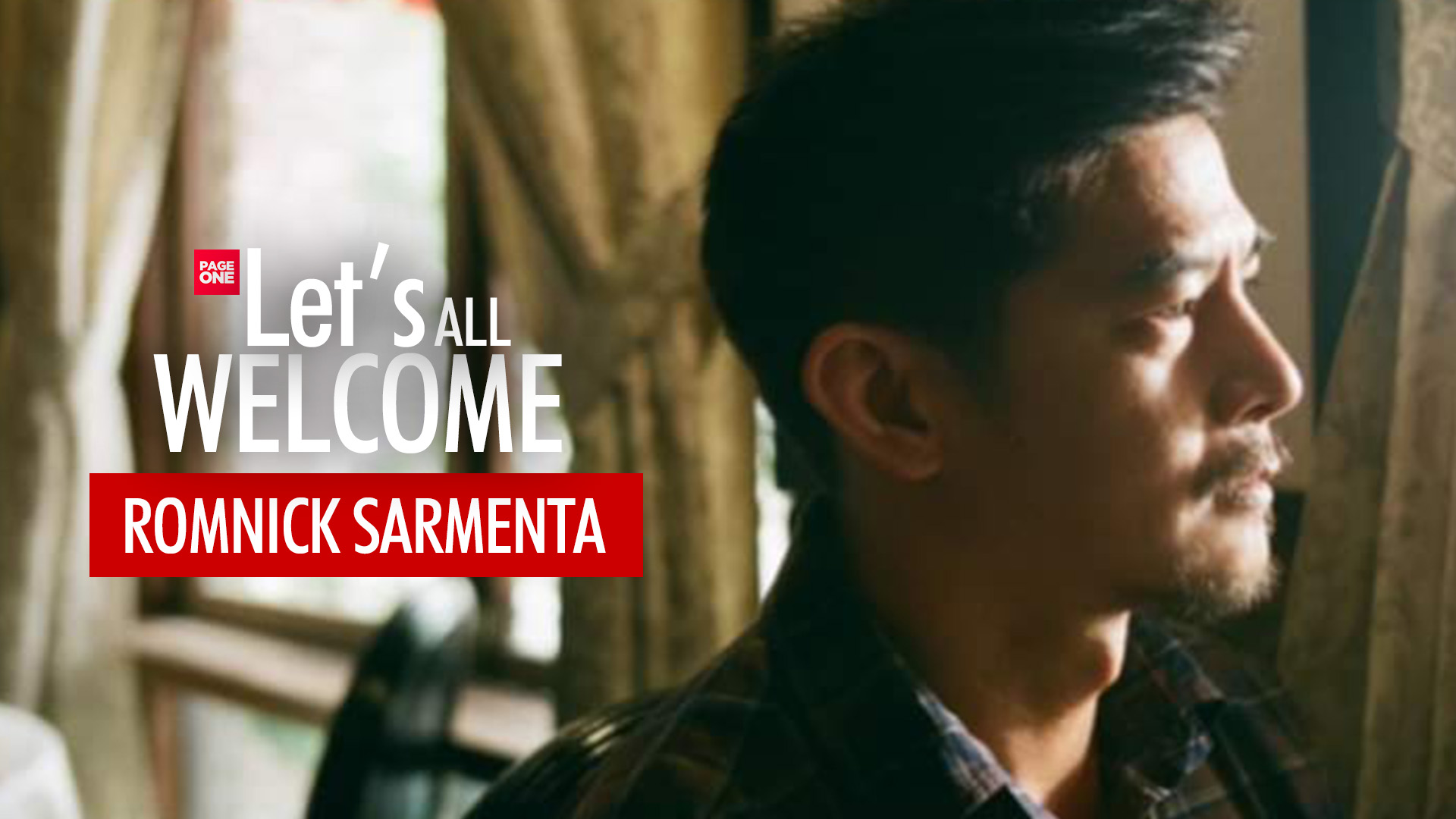







After decades in an industry often measured by visibility and longevity, Romnick Sarmenta looks forward not with nostalgia, but with clarity. For him, legacy is not about titles, awards, or the size of one’s celebrity. It is about values carried quietly, lessons passed on through work, and the kind of cinema that leaves something meaningful behind.
At the heart of what continues to inspire him is family. “Family,” he says simply. “I am blessed with a family that is content and appreciative.” There is deep affection in the way he recalls how his children only learned about the extent of his fame years later. “My first and second born were already teens before they even found out from another friend of mine how ‘big a celebrity’ I was at their age,” he shares, adding that they only then searched for his name online. “I love that. That they do not have any sense of entitlement.”
His gratitude extends to his wife, whose understanding anchors him amid the demands of his profession. “Keeping up with your crazy schedule isn’t easy, so finding someone who understands why you do what you do puts your mind and heart at ease.” In an industry built on connections, Romnick values something rarer. “Friends, the very few friends I keep in the business, real friends, not network. People who care for your being and not your stature.” Beyond them, he finds constant inspiration in people themselves. “The people you get to meet are all interesting and amazing. An endless resource for learning and discovery, and selfless sharing.”
Through the years, one principle has sustained him above all else. “Integrity is important,” Romnick states. “Who you are and what you do when no one sees you must be the same as when you are around the people who admire you.” It is a conviction that has shaped his career choices, even when those choices came at a cost. “Never compromise your convictions and values. Even if it means losing projects for a time. The right ones come along because you have proven to people who you really are.”
He speaks candidly about how his beliefs influence the roles he accepts. “I have played bad guy roles, not because I’m a baddie,” he says with humor, “but because I have it in my clause that they die or pay for their crimes, because I believe in justice.” For Romnick, integrity means refusing to glorify what he does not stand for. “I refuse to glorify anything I do not believe in. That is a personal conviction.”
The same honesty applies to his portrayal of complex characters. “I have played gay roles because I do not believe that God loves them less,” he explains, while also setting clear boundaries rooted in faith. “But I will not do films that remove the expression of faith in order to glorify the community. That is my religious conviction.” His message is firm and unwavering. “Stay true to yourself. Practice integrity. It should never be for sale.”
For aspiring actors hoping not just to enter the industry but to endure within it, Romnick offers advice grounded in humility. “Fame and glory is nothing compared to kindness and compassion,” he says. “Money fades away, but the true value of work is in the heart and effort that you put into it.” He admits that his journey has not been linear. “I have walked away from this industry several times, only to be happily and gratefully dragged back in.” His faith gives him perspective. “God puts you where He needs you to be. Wherever that is, show up for work and do your job happily.”
When asked how he hopes to be remembered, Romnick does not claim certainty. “I really don’t know,” he says honestly. What he does hope for is simple and sincere. “I hope they remember and keep everything they learned from the movies and television shows I made.” Whether it comes from “some words memorised from a script, or an ad lib I did with the director’s permission, or a look that I felt I had to give,” what matters to him is that something of value remains. “I give them a piece of me because I want them to feel something.” And if nothing else endures, he offers a quiet prayer. “If they remember nothing else about me, I pray they remember what they learned of value.”
Looking ahead, Romnick finds his greatest hope in the next generation of artists and storytellers. “The next generation,” he says, is what excites him most. His vision for Philippine cinema is deeply rooted in purpose. “I pray they care for the arts, how it speaks for truth, how it can fight for justice and equality, how it is supposed to make us think and bother us.” He longs for a return to cinema’s cultural and moral weight. “I pray that the true value of cinema, as uplifting and culture building, is realised.”
He is also candid about his concerns. “I pray that it is no longer the commercialised marketing heavy films that gets churned out, but real stories of who we are as people, not followers of trends and virality seekers using poverty-porn or scandalous stories to get noticed.” His hope is rooted in history and gratitude. “Because we used to lead in Asia. In the history of Asian film making, back then we were the standard.” And with quiet reverence, he adds, “I pray that again, for the industry that has sustained and nourished me.”
In the end, Romnick Sarmenta’s legacy is not one he defines for himself. It is one shaped by integrity lived daily, faith held firmly, and stories told with intention. Not for applause, but for meaning.