










Implementing comprehensive reforms that address barriers to job creation and strengthen household resilience will help the Philippines reduce its poverty rate to below 3 percent and become a predominantly middle-income class society by 2040, a World Bank report said.
The World Bank’s “Building the Filipino Middle Class: Towards Resilient Futures and Poverty Eradication” report said the Philippines made significant progress as the poverty rate had fallen to 15.5 percent in 2023 from 23.5 percent in 2015.
Income inequality also dropped to its lowest level in four decades.
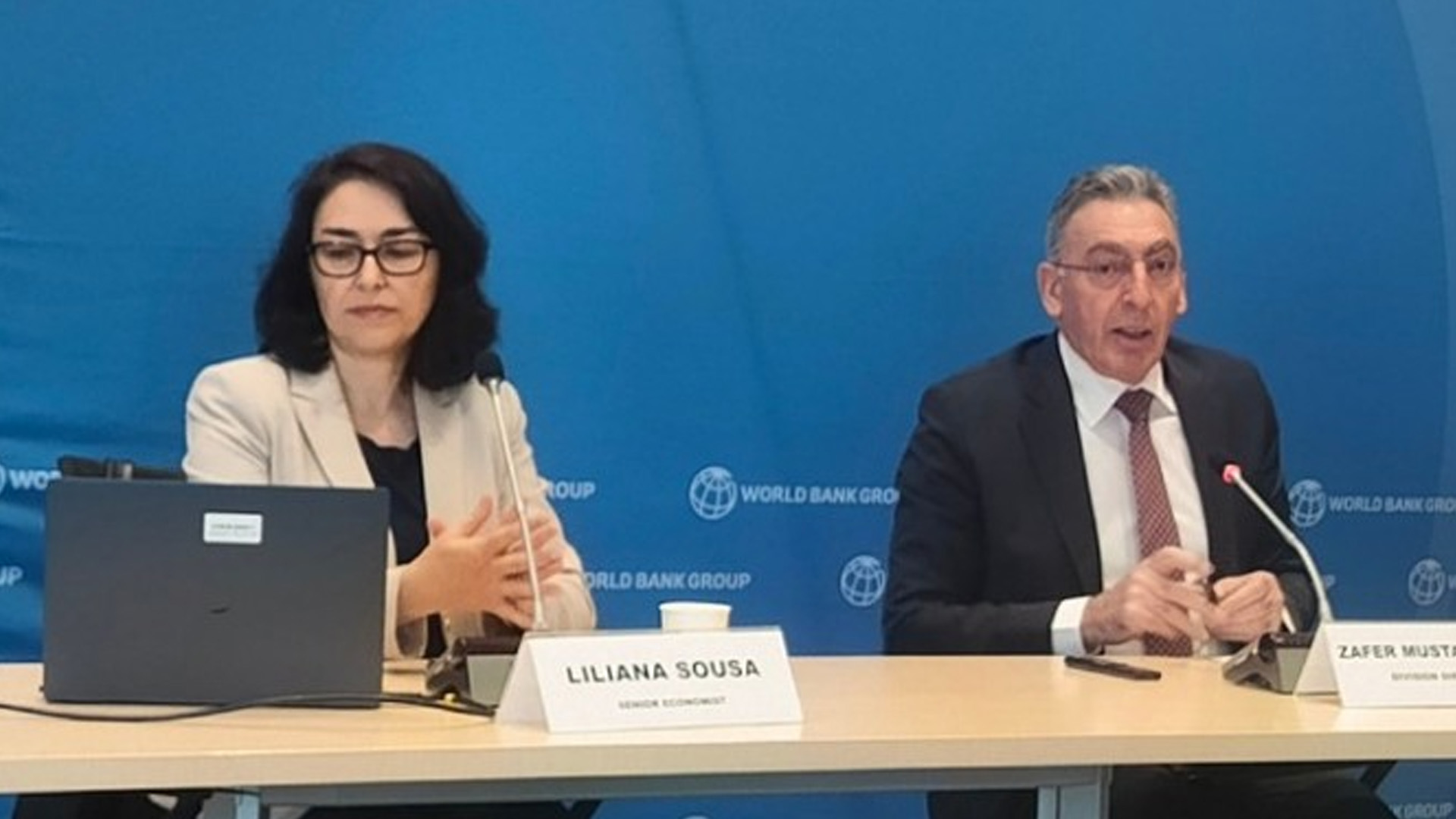
“These are not minor statistics. They represent millions of Filipino families who have moved out of poverty and into better lives,” World Bank Division Director for the Philippines, Malaysia, and Brunei Zafer Mustafaoglu said in a briefing at the World Bank’s office in Bonifacio Global City on Thursday.
“These gains did not happen by chance. They are the result of deliberate policy choices – the expansion of social protection through 4Ps (Pantawid Pamilyang Pilipino Program), investments in infrastructure, and the growth of jobs in services and construction. The Philippines deserves full credit for making them. This is a strong foundation – stronger than many realize – and it is the foundation on which the next chapter will be built.”
World Bank senior economist Liliana Sousa said the poverty reduction is a “real hard-won progress.”
“It really reflects improvement in the Philippine economy, such that workers who were previously working in agriculture were able to get better jobs, better-paying jobs, in sectors like transportation, construction, and commerce,” she said.
The World Bank’s report, however, said that despite the progress, almost 28 percent of Filipinos are still vulnerable or remain at risk of falling back into poverty.
The secure middle class, or the economically secure households, which is about a quarter of the population, also barely grew since 2018.
The report added that 61 percent of the population is also at risk from climate-related disasters, while most families have no savings or insurance to fall back on. It includes economic modeling for two futures.
Under a business-as-usual scenario, the poverty rate will be reduced to 6 percent while the secure middle class will rise to 43 percent from the current 23.8 percent.
Under a comprehensive reform scenario – pairing growth and job creation policies with a focused equity and resilience agenda, poverty could go down to as low as 2.9 percent while the middle class will also go up to 55 percent, achieving the country’s Ambisyon Natin 2040 vision.
“With the right policies, we can achieve poverty eradication and build a middle-class society by 2040,” Sousa said.
The report cited the need to create better jobs, strengthen resilience, and improve public services to attain the government’s Ambisyon Natin 2040 vision.
It also called for reforms to encourage broader opportunities for formal employment for lower-skilled workers.
Enabling more women to enter and stay in the workforce is also imperative, the report added.
To strengthen resilience, the World Bank called for updating the 4Ps program and extending coverage to vulnerable households.
It also recommended better agricultural insurance and rebalanced agricultural spending to sustainably lower food prices – both of which would particularly benefit the poorest families.
The World Bank said quality public services, including in health and education, are also essential to lasting poverty reduction.
The report urged the government to strengthen local capacity and break down data silos to get more out of every peso spent.
“When we simulate this, we find that by 2040, with policies in place, with policies that support growth, with policies that support job creation, the country will be able to reach the Ambisyon Natin 2040 goal of a predominantly middle-class society, 55 percent in the secure middle class by 2040, and poverty rate of only 2.9 (percent),” Sousa said. (PNA)