



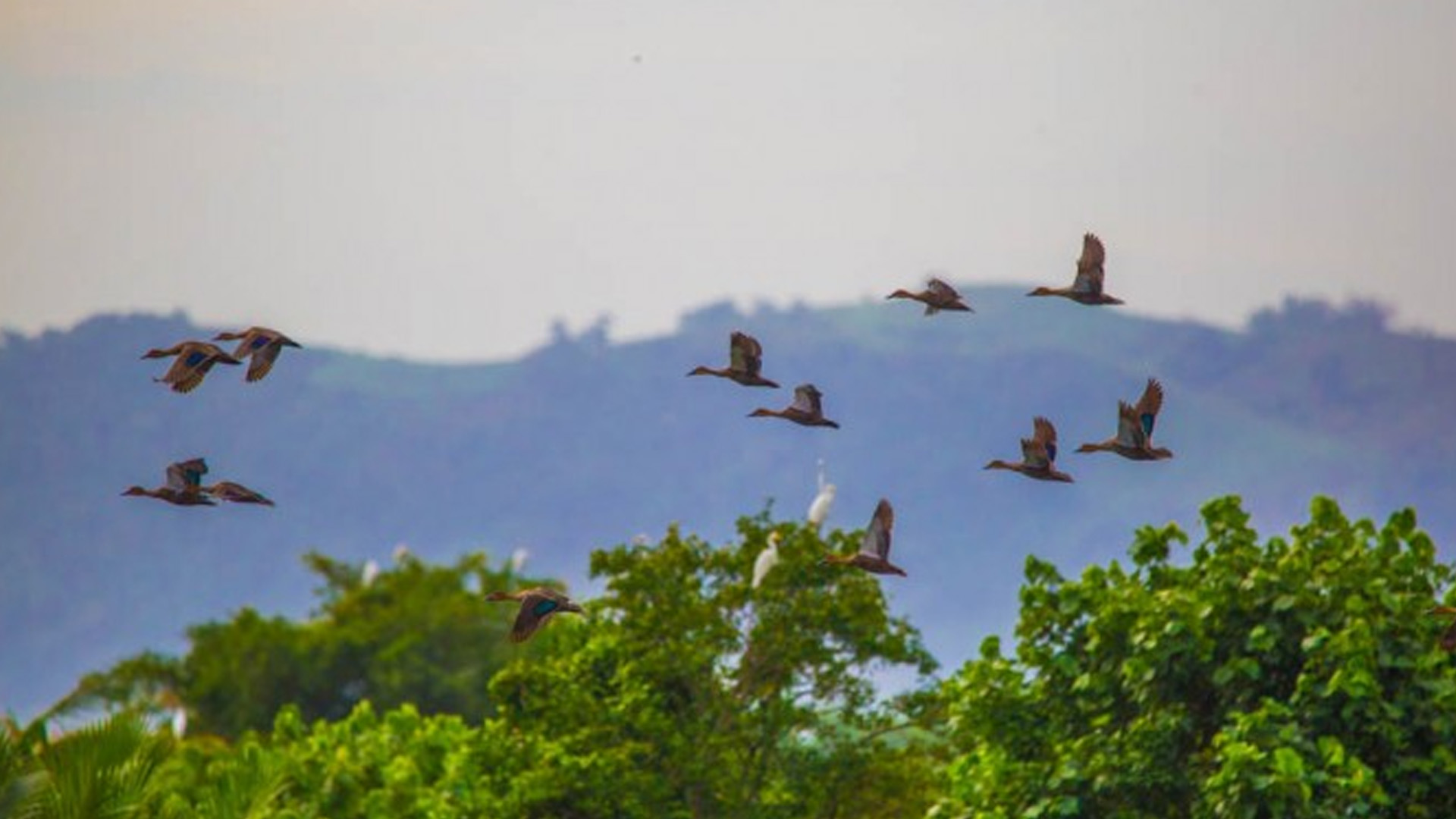







Over 26,600 migratory birds of around 40 species flocked to the wetlands of four local government units in Capiz, according to the Asian Waterbird Census (AWC) conducted this month.
“Our wetlands here in Capiz are still rich, giving these migratory visitors a good supply of food for the next leg of their journey. When we see them, we know that our biodiversity here is abundant,” Capiz Environment and Natural Resources Officer Ernest Federiso said in a report released by the Department of Environment and Natural Resources on Thursday.
The AWC was conducted on Jan. 6-9 at the Palina River in Roxas City, covering the barangays of Cagay, Barra, Talon and Balijuagan; the barangays of Cudian and Agustin Navarra in Ivisan; and the barangays of Poblacion, Dapdapan and Lonoy in Sapian.
Another survey was at the Roxas City Airport and Barangay Dulangan in Pilar and Intongcan, Agbanog, Bantigue and Gabuc in Pontevedra on Jan. 12-15.
The survey team consisted of personnel from the Department of Environment and Natural Resources (DENR)–Capiz, with the Community ENR Office in Mambusao and supported by the concerned local government units, Civil Aviation Authority of the Philippines, and David Quimpo of the Haribon Foundation.
An estimated 16,748 individual water birds were recorded on the first count sites; the highest was recorded in Sitio Talingting, Barangay Poblacion, Sapian estimated at around 11,547.
Whiskered tern (Chlidonias hybridus) topped the list with an approximate 8,943 heads.
The second bird count recorded around 9,915 birds, bringing the total number of migratory birds flocking to the rich wetlands of Capiz province to around 26,663.
The highest number of waterbirds during the second survey was recorded in Barangay Gabuc at roughly 5,415; the most being the Little Egret (E. garzetta) with an estimated 2,574 heads, the DENR report said.
The AWC is part of the annual regional and international effort to monitor waterbird populations and promote wetland conservation.
The results offer critical insights into the population trends of both resident and migratory birds.
“The AWC is not just about counting birds; rather, it is a vital scientific tool that provides deep insight into the status of our wetland areas. With the data, we can contribute something to biodiversity assessment, conservation planning and most of all, policy formulation,” DENR-6 Regional Executive Director Raul Lorilla said.
The migration season for waterbirds in the Philippines commences from September until February of the succeeding year. The birds travel back to their breeding grounds by March. (PNA)