



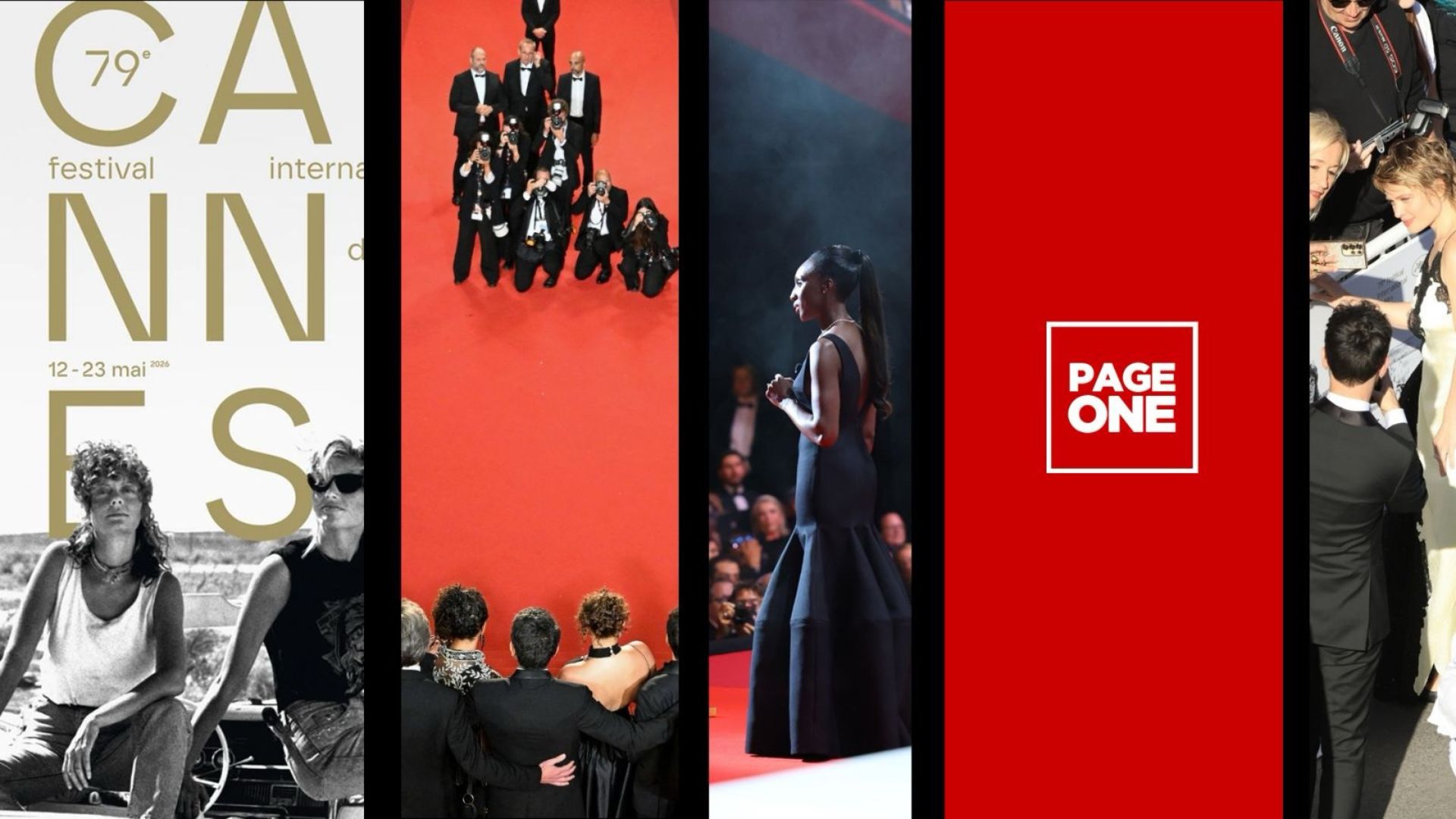







The 79th Cannes Film Festival’s official selection is shaping up to be a rich and varied cinematic spread — a mix of celebrated masters, long-absent veterans, and first-timers with something to prove. This watchlist sets aside the obvious draws (Pedro Almodóvar, Asghar Farhadi, Kiyoshi Kurosawa) since those need no introduction, and instead spotlights three past Palme d’Or winners, several Competition newcomers, directors making a comeback after years away, and a handful of debut and sophomore features — many by women — that carry genuine breakout potential.
Competition
Minotaur Russian director Andrey Zvyagintsev, 62, has never left Cannes empty-handed, and his return this year is all the more remarkable given that his last few years were marked by a serious illness that put him in hospital and an induced coma. His first film since Loveless (2017) — which won the Jury Prize — centers on a Russian business executive who discovers his wife is having an affair while simultaneously preparing mass layoffs at work.
Fjord 2007 Palme d’Or winner Cristian Mungiu (4 Months, 3 Weeks and 2 Days) is back in Competition with his sixth film — his first in the English language and his first shot entirely outside Romania. It pairs Romanian-American actor Sebastian Stan with Norwegian actress Renate Reinsve as a couple whose conduct comes under intense local scrutiny after they settle in the wife’s remote Norwegian hometown.
Sheep in the Box 2018 Palme d’Or winner Hirokazu Kore-eda (Shoplifters) is making his seventh Competition appearance with a near-future science fiction story. After the death of their child, a couple — an architect and her construction firm-owning husband — bring a humanoid robot into their home. Haunting and seductive in equal measure, the film is said to draw from the beloved French children’s classic The Little Prince.
Gentle Monster Austrian director Marie Kreutzer enters Cannes Competition for the first time with a drama led by Lea Seydoux and Catherine Deneuve — a pairing alone worth the price of admission. The film follows two women: a celebrated Munich pianist who retreats to the countryside after her partner’s burnout, and a special investigator caring for her ailing father. Both are forced to confront uncomfortable truths about the men in their lives.
The Dreamed Adventure German filmmaker Valeska Grisebach, whose third feature Western landed in Un Certain Regard in 2017, steps into the Main Competition with only her fourth film in 25 years of filmmaking. Set along the border territory between Bulgaria, Greece, and Turkey, the story follows a woman who agrees to help an old friend — a seemingly simple decision that pulls her into murky terrain and forces a reckoning with her own past and desires.
L’Inconnue (The Unknown) Arthur Harari, who co-wrote Justine Triet’s Palme d’Or-winning Anatomy of a Fall, enters Competition as a director for the first time with his third feature. A psychological fantasy loosely adapted from a graphic novel he created with his brother Lucas, the film — starring Lea Seydoux and Niels Schneider — follows a man who wakes up inhabiting the body of a woman he slept with after a wild party.
All of a Sudden Oscar winner Ryusuke Hamaguchi (Drive My Car, 2021) makes his French-language debut here, starring Virginie Efira and Tokyo-born Paris-based actress and model Tao Okamoto. Set in a suburban Parisian nursing home, the film follows a facility director who champions an unconventional care philosophy called Humanitude amid institutional resistance — and whose life is upended by a dying Japanese playwright.
Fatherland UK-based Polish director Pawel Pawlikowski, who took the best director prize at Cannes in 2018, returns to Competition with a Cold War-era road trip film. Hans Zischler plays Nobel laureate Thomas Mann, while Sandra Hüller portrays his daughter Erika, as the two travel from Frankfurt in West Germany to Weimar in East Germany. Like Pawlikowski’s Ida and Cold War, the film is shot in black and white by cinematographer Lukasz Zal.
Un Certain Regard
Congo Boy Central African director and slam artist Rafiki Fariala tells the story of a teenage Congolese refugee in Bangui who dreams of becoming a musician even as civil war tears through the country and both his parents are imprisoned. Caught between personal ambition and the weight of being the eldest of five siblings, the boy navigates an impossible situation. The selection marks a historic moment for the Central African Republic at Cannes.
Ben’Imana Kigali-born filmmaker Marie-Clementine Dusabejambo makes her feature debut with a 2012-set drama following a survivor of the 1994 anti-Tutsi genocide working toward justice and reconciliation. When professional pressure collides with a family crisis, she is forced to examine everything she believes in. The film is the first by a Rwandan filmmaker to earn a spot in the Cannes official selection.
Elephants in the Fog Nepali writer-director Abinash Bikram Shah’s debut feature follows the matriarch of a Kinnar community torn between escaping with the man she loves and staying behind to find a missing woman. The film is Nepal’s first feature in Cannes’ official selection. Shah previously won a Special Jury Mention in Cannes’ short film competition in 2022 and co-wrote Sambhala, Nepal’s first-ever entry in Berlin’s Golden Bear competition.
La Mas Dulce (Strawberries) Franco-Moroccan filmmaker Laila Marrakchi (Rock the Kasbah, 2013) returns to Cannes with her third feature in two decades. Moving away from her usual Casablanca settings, the film is set in Spain and centers on Moroccan women who travel to Andalusia for the strawberry harvest, only to face exploitation and hardship along the way.
Yesterday the Eye Didn’t Sleep Palestinian filmmaker Rakan Mayasi — born in Germany and based between Brussels and Beirut — makes his feature debut with a film caught between myth and reality, shot entirely in Lebanon’s Bekaa Valley with a cast of non-professional actors. In a region described as cloaked in fog and bound by tribal codes, a young woman torches the vehicle of the man she loves upon learning he is to marry another. The consequences spiral outward from there.
The Meltdown Chilean director Manuela Martelli, whose debut 1976 premiered in Directors’ Fortnight in 2022, now arrives in Un Certain Regard with a story set in post-dictatorship Chile. A nine-year-old girl living with her grandparents near a ski resort befriends a 15-year-old German skier — until he disappears without explanation, leaving behind a web of unanswered questions.
I’ll Be Gone in June Drawing from her own experience as an exchange student in New Mexico, German actress-turned-director Katharina Rivilis presents her debut feature about a girl who relocates to a desert town in the American Southwest in 2001 and forms a deep bond with a local boy navigating struggles of his own. The film carries the backing of legendary German director Wim Wenders as co-producer.
All the Lovers in the Night Japanese director Sode Yukiko’s first film in five years is an adaptation of Mieko Kawakami’s 2011 novel of the same name. A freelance proofreader living a quiet, withdrawn life begins to shift when she crosses paths with a reserved high school physics teacher. In what is already a strong year for Japanese cinema in the official selection, this one carries the makings of a quiet festival revelation.
Special Screenings & Other Sections
Rehearsals for a Revolution (Special Screenings) UK-based Iranian actress-director Pegah Ahangarani delivers a 95-minute documentary spanning over four decades of Iranian history — from the upheaval of early 1979 through to the conflict of 2026 — weaving her own life story into the broader political and social landscape of her homeland.
Visitation (Cannes Premiere) Octogenarian German director Volker Schlöndorff — whose The Tin Drum won the Palme d’Or in 1979 — returns to Cannes with his first fiction feature in nearly a decade. Centered on a lakeside house near Berlin, the film spans a century of history, watching generations pass through as regimes rise and fall and the world reshapes itself around them.
Her Private Hell (Out of Competition) Danish provocateur Nicolas Winding Refn returns to the big screen for the first time since The Neon Demon competed at Cannes in 2016. After two television forays — Too Old to Die Young for Amazon and Copenhagen Cowboy for Netflix — Refn is back with a futuristic thriller in which characters search for missing loved ones in a city blanketed by a deadly, mysterious mist.
Sanguine (Midnight Screenings) Debutante Marion le Coroller brings a midnight genre entry about Margot, a medical intern who notices a pattern of inexplicable symptoms among patients her own age — and then begins spotting the same signs on her own body. A midnight slot means expectations are already calibrated: this one is here to unsettle.
A Festival Worth The Anticipation
The 79th Cannes Film Festival’s official selection makes one thing clear: world cinema is in restless, ambitious form. From Zvyagintsev’s hard-won comeback to Kore-eda’s genre pivot, from Pawlikowski’s Cold War elegies to a wave of debut filmmakers carrying the stories of Rwanda, Nepal, the Central African Republic, and Palestine to the Croisette for the very first time, this edition refuses to settle into predictability.
What makes this year’s lineup particularly compelling is not just the weight of its established names but the genuine breadth of its emerging voices — many of them women, many of them telling stories rooted in corners of the world that Cannes has historically overlooked. Whether the festival ultimately crowns a master or hands its top prize to a first-timer, the 2026 edition already has the shape of one that will be talked about long after the closing ceremony. Twelve days, twenty films, and no shortage of reasons to pay attention.