



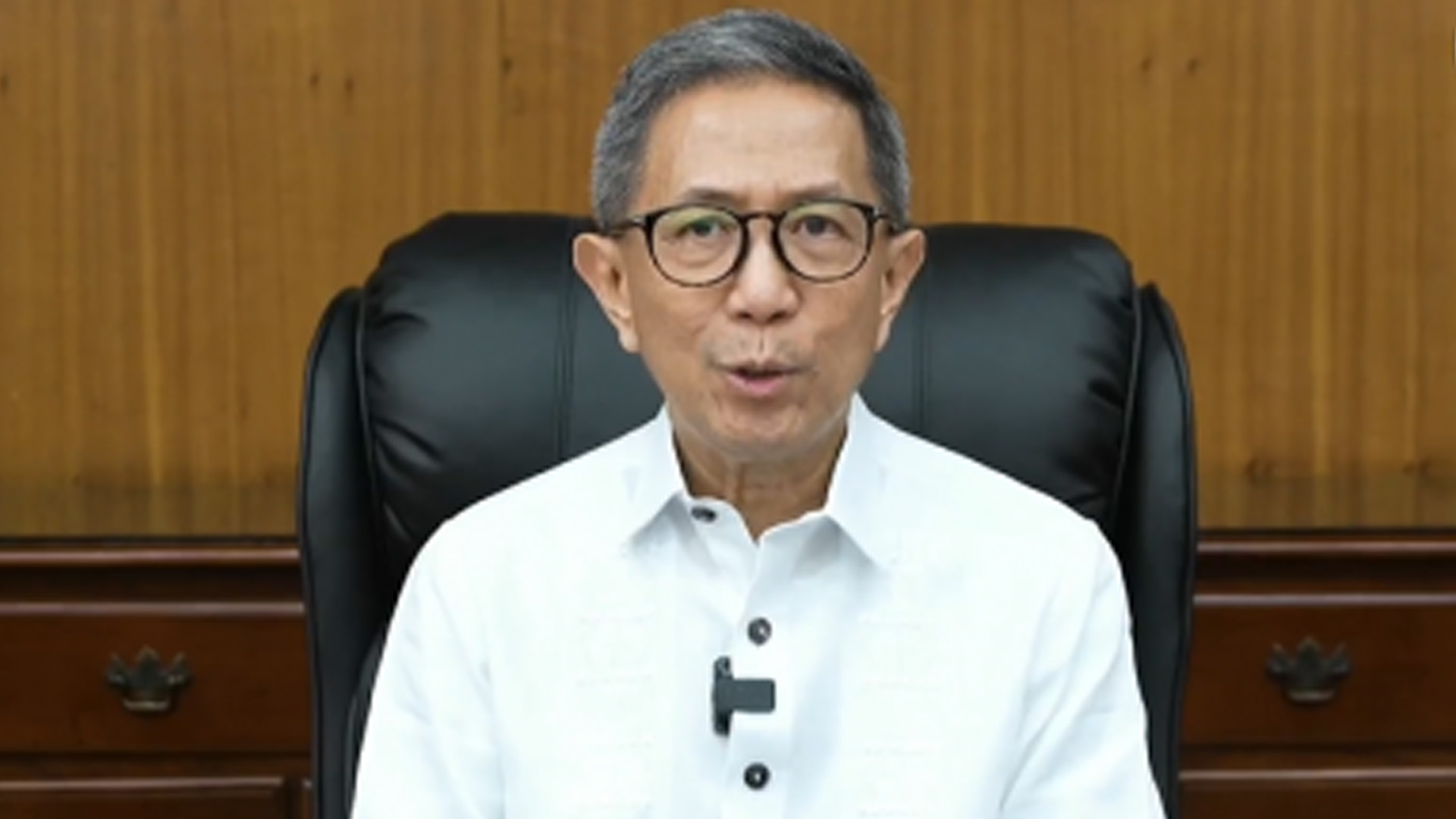







Department of Environment and Natural Resources (DENR) Secretary Raphael Lotilla underscored the importance of responsible mining in driving sustainable economic growth and community development.
During the Pilipinas Conference organized by StratBase ADR Institute in Makati on Friday, Lotilla said the DENR, through the Mines and Geosciences Bureau, is implementing reforms to a more integrated, future-focused governance approach in the mining industry.
“We are advancing a whole-of-government policy shift to elevate the mining sector’s contribution to national development. At present, mining contributes roughly 1 percent to the national gross domestic product,” he said.
“Through targeted policy interventions, we aim to double this to 2 percent by 2028, and to do so not through extraction alone, but through value-adding, downstream processing, and better integration with clean energy and manufacturing supply chains,” he added.
However, Lotilla said that these reforms are not limited to regulations, noting that “wealth beneath the ground means little if it does not translate to sustainable, equitable value above ground.”
He said the DENR is currently finalizing an executive order to establish a national policy framework on developing a critical minerals industry.
This framework will promote responsible exploration and extraction, but also push for investment in processing, circular value chains, and domestic manufacturing linkages, moving beyond the export of raw ore, Lotilla explained.
“It will ensure that our environmental rules are not diluted, but instead modernized to keep pace with innovation, climate realities, and market demand,” he said.
Lotilla said the DENR seeks to establish and promote the country as a reliable and responsible contributor to the global energy transition, leveraging mineral resources to claim its space in clean technology value chains.
He said among the policies introduced by the department to strengthen mining are aligning its social development programs with the United Nations Sustainable Development Goals to ensure measurable benefits for host communities, streamlining permitting under the Philippine Mining Act to improve transparency and predictability without compromising environmental safeguards, and integrating mining with national economic and clean energy strategies to maximize long-term value.
Lotilla said the transition to a circular economy is central to the country’s long-term resilience, as it requires going beyond traditional models of consumption and disposal, and designing systems where materials are reused, repurposed, or reintegrated into the value chain.
“The goal is not simply to mine more. It is to mine better, process smarter, and govern with integrity so that the Philippines becomes a reliable and responsible contributor to the global clean energy transition while assuring our people and host communities of their fair share in the fruits of development, while protecting our environment,” Lotilla said. (PNA)