



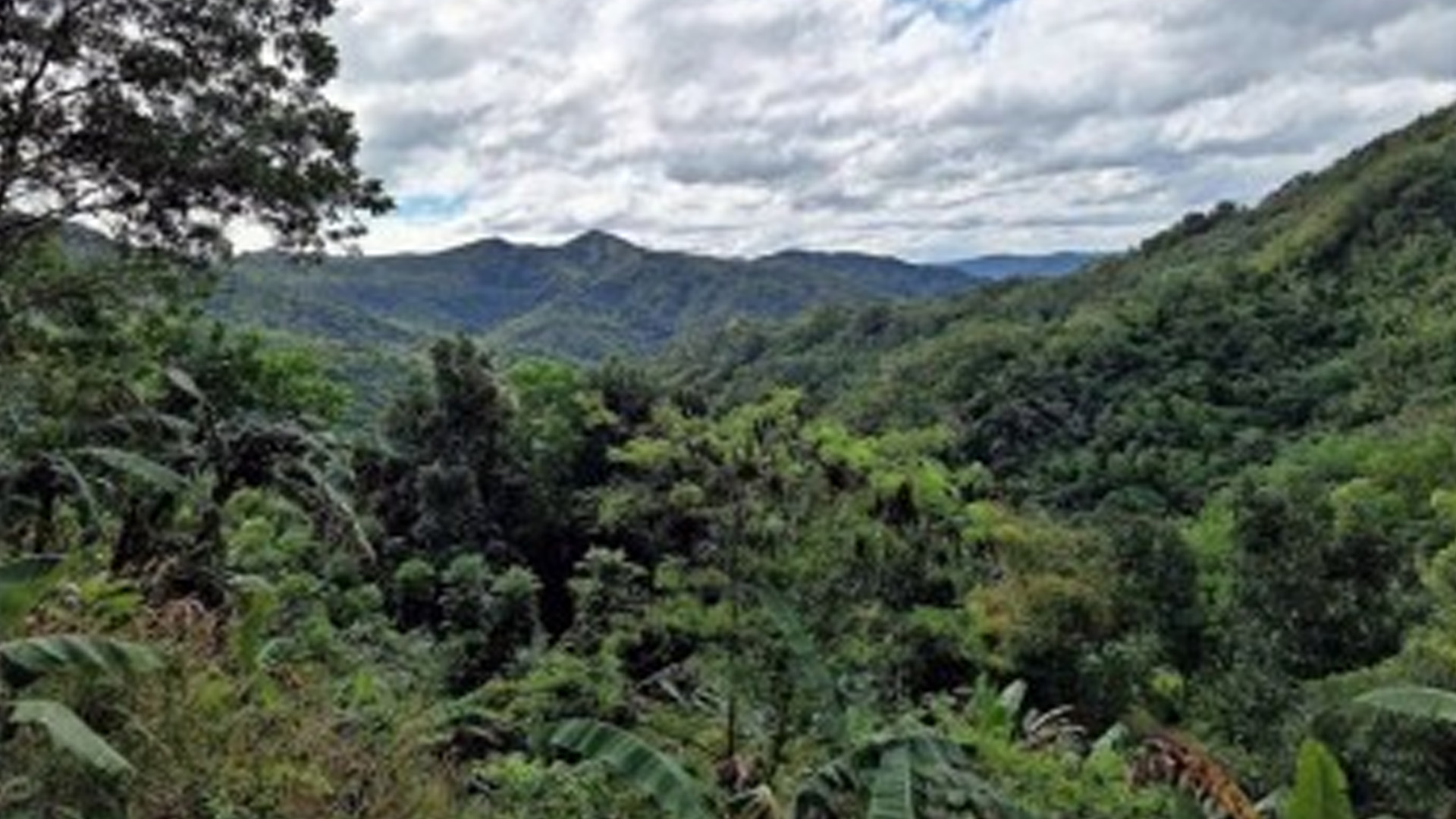







The Department of Environment and Natural Resources (DENR) on Thursday announced its plans to accelerate reforestation of the Upper Marikina River Basin Protected Landscape (UMRBPL) to nearly double its forest cover as part of its efforts to fight climate change and reduce disaster risks for nearby communities.
In a news release, DENR’s Forest Management Bureau Assistant Director Ray Thomas Kabigting revealed that currently, just under 25 percent of the UMRBPL’s more than 26,000 hectares of land are forested, and that the agency aims to expand this to 43 percent by planting 3 million new trees by 2028.
He said through this initiative, the DENR hopes to protect Metro Manila and parts of Rizal province from destructive floods, landslides, and rising temperatures.
“A healthy forest cover is also essential to the country’s climate and disaster resilience agenda as it mitigates climate change and conserves biodiversity critical for ecosystem resilience and agricultural productivity,” Kabigting said.
“With the target of planting three million trees by 2028, the UMRBPL is not only fostering a more resilient environment but also setting a precedent for sustainable development and conservation efforts in the region.”
The Upper Marikina watershed, which spans Antipolo City and the municipalities of Baras, Rodriguez, San Mateo, and Tanay, was declared a protected area in 2011 after Tropical Storm Ondoy’s devastating floods highlighted the consequences of degraded upland forests.
Kabigting said reforestation and natural regeneration are already yielding results, stating that open forest areas have decreased by 1,138.28 hectares, or 20.95 percent, as more dense, “closed” forests, which absorb more carbon and shelter greater biodiversity, take their place.
Additionally, he said 628.47 hectares, or 1.77 percent of shrublands, have also evolved into open forests, further boosting the area’s climate buffer capacity.
Kabigting stressed the ecological significance of the increase in closed forests, which are denser and more biodiverse.
“The rise in closed forest cover signifies that previously degraded or barren areas are now thriving with healthy trees,” he said, explaining how this success reflects the positive effects of sustainable forest management practices and reforestation efforts.
Kabigting said threatened and endangered wildlife species found in the Marikina watershed include forest trees like narra, red and white lauan, bagtikan, kamagong, and molave, while the wild fauna includes birds like the Philippine bulbul, black-naped oriole, and jungle fowl; mammals like the Philippine deer, wild pig, and the Philippine monkey; and herpeto-fauna such as the monitor lizards and forest frogs.
DENR-Calabarzon Regional Executive Director Nilo Tamoria, meanwhile, said these reforestation efforts build started since the watershed was proclaimed a protected area and logging was banned in natural forests, noting the important role of private companies and community groups.
He said that since 2021, 45 companies and organizations have partnered with the DENR and local People’s Organizations to adopt 743 hectares of National Greening Program (NGP) graduated sites in the UMRBPL.
“A key strategy involved private sector participation through the adoption of graduated plantations—previously established sites for the NGP,” he said.
Meanwhile, the UMRBPL Management Plan 2020–2030 also protects large sections of the watershed under Strict Protection Zones, where human activity is limited to scientific research and Indigenous cultural practices to ensure that carbon-rich forests and fragile habitats remain intact for the long term. (PNA)