



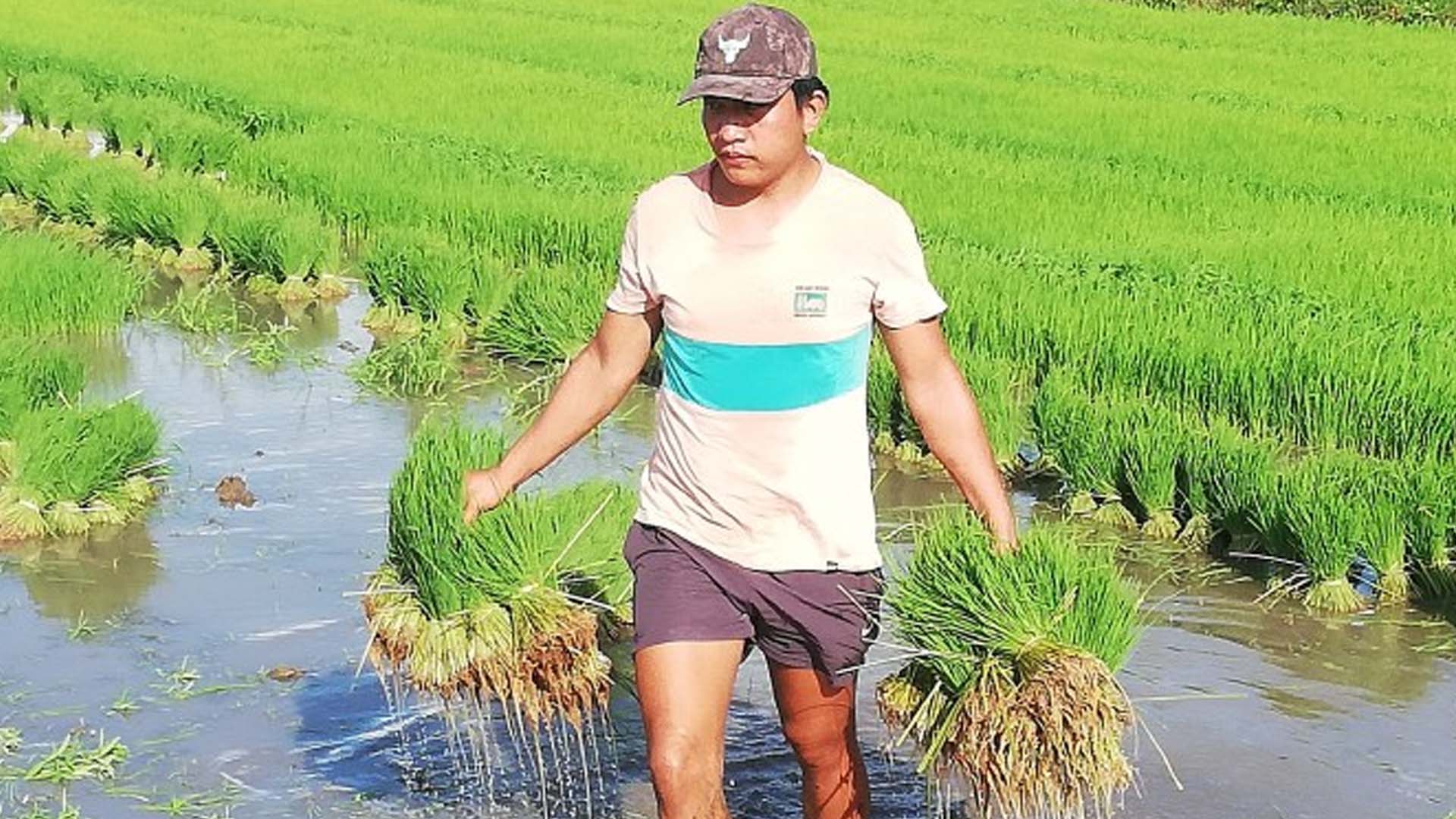







The Department of Agriculture in the Cordillera Administrative Region (DA-CAR) on Tuesday said the use of drone will give better income to farmers, aside from addressing the lack of farm manpower.
“It costs less than when done manually by persons, which will take time and a lot of manpower,” DA-CAR regional director, lawyer Jennilyn Dawayan, said in a message to the Philippine News Agency.
She said they introduced drone use in farming to 11 members of the Calaocan Farmers Association (CFA) in Rizal, Kalinga in December 2024, with their yield harvested in March and April.
The initiative is a sub-component of the Drones4Rice Project of the DA-National Rice Program (DA NRP), which aims to standardize protocols for drone applications of seeds, fertilizers, and pesticides for rice production.
It also aims to reduce production costs, resolve the scarcity of manual labor, and attract the youth into farming.
Dawayan said the DA has long been using drones in monitoring damage, monitor production and for farm documentations.
“We are encouraging the use of drone to the rice farmers and we have assistance on that as a showcase, like the Calaocan farmers who adopted the use of drone in farming,” she said.
“Ang unang feedback, lesser cost in terms of labor at tumaas ang yield, but we are studying if it can be partly attributed to that (the initial feedback we got was that the cost decreased, but we are studying if it can be partly attributed to that).”
Dawayan noted that with drone seeding, the plants are properly lined and the distances are accurate, which positively affects the plants’ growth and production.
She added that drone service is available with a provider renting out units for seeding and other services such as fertilization, pesticide application, and pest and disease monitoring.
“For now, it is just for rice, and we are doing it with the farmer’s association that adopted the system. Later on, we will also give support for the drone use of vegetable farmers’ associations, but the requirement is that the farms should be contiguous and without any aerial hindrance or blockades like electric posts and electric lines,” Dawayan said.
She admitted that farmers remain hesitant to adopt technologies for farming, but they are hopeful that the first group, the CFA’s experience, will be appreciated by the other farmers and start to adopt the same for their benefit.
Based on a report of the DA-CAR, the 11 initial drone users have farms that are contiguous to each other, with an aggregate land area of 20 hectares. They are holders of the Intervention Monitoring Cards (IMC) which were piloted in Kalinga and Apayao, allowing farmers to receive government intervention.
Gabriel Balion, CFA acting president, said in a DA-CAR documentation report that from the 206 cavans normally produced by their members using the traditional manual farming method, the yield increased to 430 cavans with an average of 60 kg. per sack using the drone method of seedling, fertilization and applying pesticide.
“These were greatly attributed to the precise distribution of seeds, inorganic fertilizers, biofertilizers, and ameliorants,” Balion said, as quoted by the DA. (PNA)