



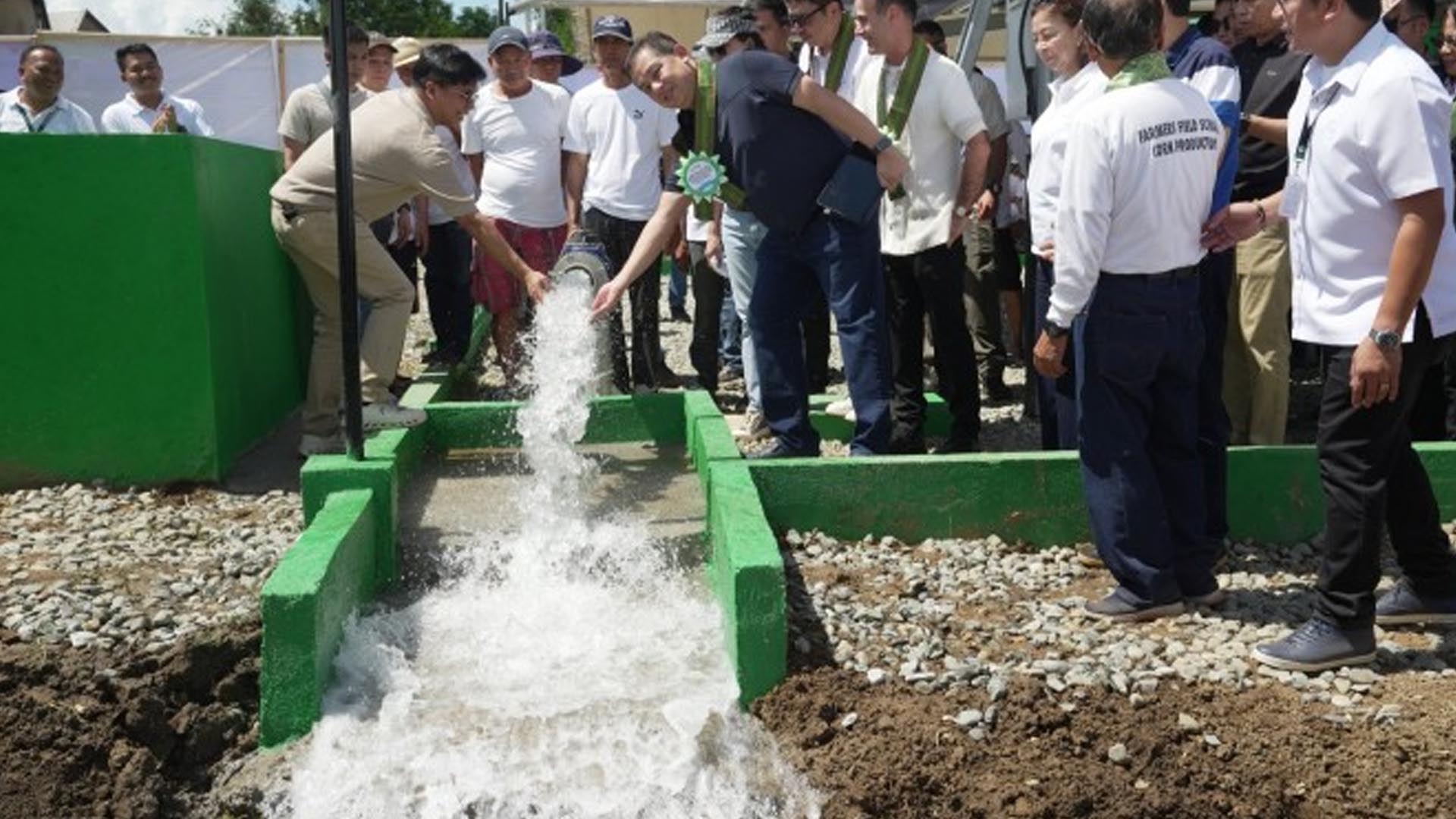







Speaker Martin Romualdez on Thursday pledged continued congressional support for solar-powered irrigation projects, as he led the mass turnover of more than 20 systems to Central Luzon farmers in a bid to cut costs and boost crop yields.
During the inauguration of the Maunlad na Candating–Sapang Paitan Solar-Powered Pump Irrigation Project (SPIP) in Barangay Candating, Arayat, Pampanga, Romualdez highlighted the role of emerging technology in transforming Philippine agriculture, particularly innovations that combine renewable energy and artificial intelligence (AI).
“This is the future of agriculture, assisted by AI to enhance productivity,” Romualdez said.
The system is expected to irrigate 15 hectares of farmland previously reliant on rainfall.
In total, 21 SPIPs were turned over across five provinces in Central Luzon, including seven in Nueva Ecija, 10 in Zambales, and one each in Bulacan and Bataan. Two irrigation augmentation projects were also inaugurated in Tarlac.
Each system features typhoon-resistant solar panels and AI-driven moisture sensors developed by Israel’s LR Group.
Farmers using the technology report saving as much as PHP30,000 per cropping season compared to diesel-powered pumps.
Gilberto “Apong Bert” Guina, a 75-year-old farmer, said the saved money is now redirected to family needs and farm improvements.
“Dahil sa solar irrigation, hindi na namin iniintindi ang presyo ng diesel. Yung dating ginagastos sa krudo, napupunta na sa ibang pangangailangan: sa pamilya, sa bukid. Malaking tulong talaga (Thanks to solar irrigation, we no longer worry about diesel prices. What we used to spend on fuel now goes to other needs: for the family, for the farm. It’s a big help),” Guina said.
Maunlad na Candating–Sapang Paitan Farmers’ Irrigators Association President Rey Velasco said the project marked a turning point for farmers who once relied solely on rainfall or carried water uphill.
“Noon, sa ulan lang kami umaasa… Kailangan pa naming humingi kung saan-saan ng patubig (Before, we only depended on rain… We had to beg for irrigation from wherever we could),” Velasco said.
Romualdez credited President Ferdinand Marcos Jr.’s directive to expand solar irrigation to 180,000 hectares nationwide, aiming to boost annual rice output by 1.2 million metric tons.
“President Marcos, maraming salamat po sa suporta ninyo sa ating mga magsasaka at paniniwalang kayang makipagsabayan ang Pilipino sa pinakamahusay na teknolohiya sa mundo (President Marcos, thank you for your support for our farmers and for believing that Filipinos can match the best technology in the world),” Romualdez said.
“Sa tulong ng solar irrigation at smart farming, maibabalik natin ang lakas ng produksyon at maaabot muli ang hangaring maging rice exporter (With solar irrigation and smart farming, we can restore strong production and once again pursue the goal of becoming a rice exporter),” he added.
Israeli Ambassador Ilan Fluss, National Irrigation Administration Administrator Eduardo Guillen, and Arayat Mayor Malou Alejandrino joined the ceremony.
Guillen emphasized the cost-effectiveness of the technology, estimating project costs at PHP200,000 to PHP300,000 per hectare, which he said is lower than traditional methods. (PNA)