


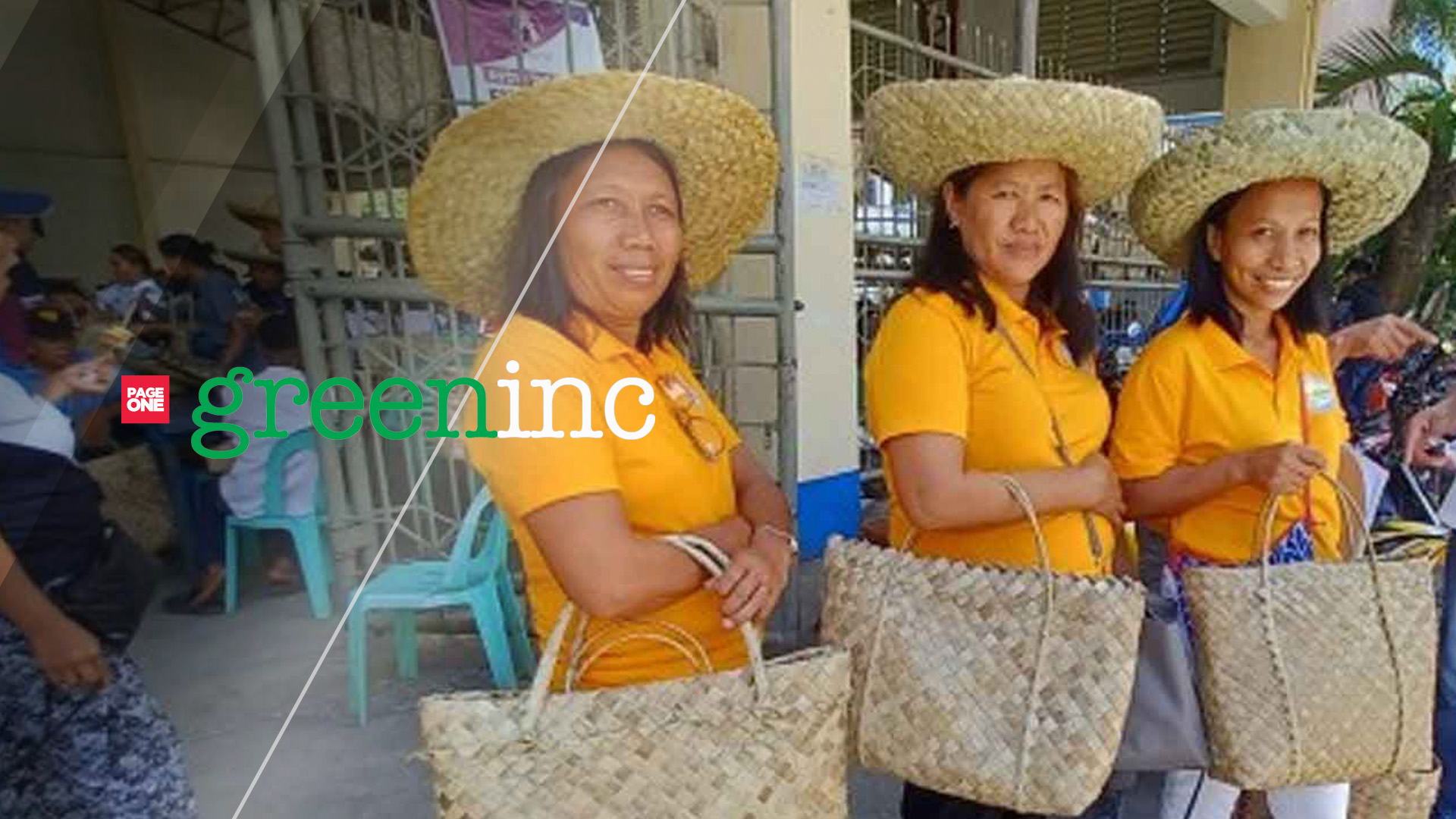







Over 4,000 “bayong” or bags made of woven dried leaves have been distributed in 42 villages in Oras, Eastern Samar to minimize the use of plastic that gravely affects the environment.
In an interview Monday, Oras town Mayor Roy Ador said the distribution of the “bayong” last week seeks to regulate the use of plastic and improve solid waste management in the town.
“This is in support of the implementation of the ordinance, which prohibits the use of plastic in groceries and markets from Thursday to Sunday of each week,” Ador said.
All establishments were advised not to use or sell plastics during these days.
The local government unit distributed “bayong” to each of the 4,000 families as they prepare for the implementation of the ordinance that prohibits the “use of plastic cellophane, sando bags as packaging materials, and utilization of polystyrene commonly known as styrofoam for food and beverages.”
Ador believes that with the use of “bayong”, the demand for plastic in local markets will be reduced.
A group of women, fishermen and farmers produced the “bayong” distributed by the local government.
A “bayong” is made from woven dried buri leaves. Filipinos used to bring “bayong” in carrying products in public markets. With the effects of climate change, the bag is now being promoted as an environment-friendly alternative to plastic bags. (PNA)